

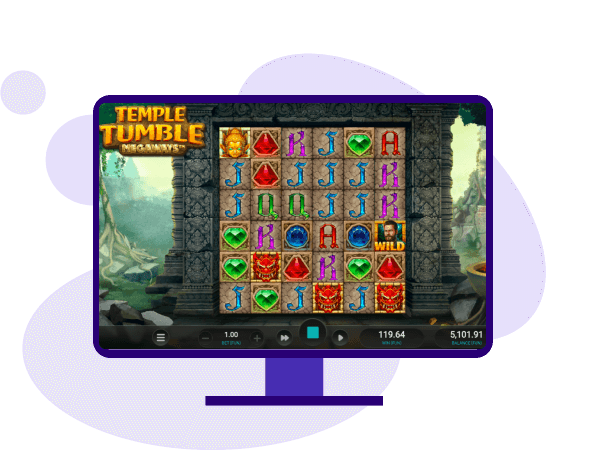





Temple Tumble

Temple Tumble Bonus Buy In Switzerland

Practical tips on stakes, breaks, and payouts - so that Temple Tumble remains controlled in Switzerland 2026, 18+ only.

Temple Tumble demo
maxwin image 1
Temple Tumble

Session Start In Switzerland 2026

Imagine you have exactly 25 minutes after dinner before you need to do something else. You want to play, but not "disappear". For exactly this, you need three clear decisions at the beginning: a time slot, a budget, and a stop sign. Without these three things, "just a quick test" quickly turns into a long session, because nothing clearly marks the end.

Make it easy for yourself: Set a timer before you spin the first round. Set a session budget that you genuinely accept as entertainment (not as money that "has to come back"). And define a non-negotiable stop sign: Timer rings, you stop. Or you feel restless, you stop. This clarity takes the pressure off, because you don't have to make new decisions in the middle of gameplay.

In Switzerland, the framework that you should take seriously anyway applies: 18+ only and responsibly, on platforms that operate within applicable rules. This is not "small print text", but a practical hint: If you notice that you are playing out of stress or boredom, a break is often the better choice than "just a few more rounds".

Temple Tumble

Game Mechanics and Rhythm Without Autopilot

Imagine you're playing on your phone, messages come in, and you click faster than you'd admit. That's exactly when you slip into autopilot: rounds run, time runs, budget runs – and in the end, the session feels empty, no matter how it turns out. Rhythm is therefore more important than any 'feeling for the moment'.

Build a routine that always starts the same way. First, 10-20 manual rounds so you can truly see what's happening. Then a quick stop: check the timer, check your mood, check your budget. If you want to continue playing afterward, fine - but consciously. If you notice that you're only continuing because you don't want to stop right now, that's a signal that you need a break.

Many games with variable reel logic can feel very different in phases: sometimes it feels like something is constantly happening, sometimes it's quiet. If you react by 'fixing' your pace or stake, it will get expensive. If you react by playing the block to the end and then pausing, it remains controlled.

A small question helps prevent most bad decisions: 'Am I playing because I want to, or because I'm waiting?' If it's waiting, it's usually better to end the session.

Temple Tumble

Planning Risk, Stakes, and Bankroll

Imagine it stays quiet for five minutes, and you feel the urge to play faster or stake higher. This is precisely where it's decided whether your session remains calm or tips over. It's not the game tipping – it's your decisions tipping. That's why you plan risk not with hope, but with a framework: derive stakes from time, not from 'it has to happen today'.

A good setup feels almost too conservative at first. That's okay. You're paying for peace of mind with it: more rounds per budget, less pressure per spin, less 'I have to do something now'. The higher the perceived fluctuations, the more important it is that each round is not emotionally charged.

Stake Selection Without Stress

Imagine you set your stake so high that you stare at your account balance after every spin. Then you're no longer playing, you're controlling – and control in this form creates unrest. Choose your stake so that you can play an entire block without every round becoming 'important'.

A simple practical test: Can you play 20 rounds without touching the stake? If not, it's often not about discipline, but because the stake is too high or the session is too long for your current state. Imagine you're tired or distracted - then you need a calmer level, not a more exciting one.

Also, make a rule for changes: only change stakes after a break. Not in the middle of a quiet phase, not directly after a highlight. This way, you separate emotion and action, and that's precisely what makes sessions plannable.

Pace, Autoplay, and Breaks

Imagine you start a longer automatic series, put your phone down for a moment, and suddenly your time slot is over. Autoplay is convenient, but convenience removes the brake. If you use it, do so briefly, consciously, and with stops in between.

Many underestimate how much pace changes decisions. Playing fast feels like 'I'll get to the exciting part faster,' but often only leads to you hitting your budget sooner. Better: short series, then a break. During the break, check your timer and mood. If you notice that you're starting autoplay out of impatience, that's a stop signal, not a solution.

And another detail that counts on mobile devices in 2026: distraction. If you're scrolling or chatting on the side, your pace automatically increases. Make the session smaller, not faster. This sounds simple, but it's the most reliable way to avoid slipping into autopilot.

Three Stop Signals for Mind and Budget

Imagine you notice you're clicking faster than you think. Or you hear yourself saying internally: 'Just a little longer, then something's sure to happen.' These are stop signals because they show you're trying to replace control with pace. In that moment, a break helps more than any adjustment.

A second stop signal is annoyance. If small losses or a quiet phase make you nervous, you're more likely to be pushed into expensive decisions. A third stop signal is the urge to reload. If you just want to 'add a little more,' the session is usually already too far off plan. Then ending it is the calmer choice.

Make it concrete: Stand up, get water, two minutes distance, look at the timer. If you still want to play afterward, okay - but without new exceptions. If you feel relief after the break, that's the best sign that ending it today is the right choice.

Mini-Plan for a Short Session

Imagine you truly just want to play for a short while today and then draw a clear line. Then use a mini-plan: timer set to 20 minutes, stake stable, play one block, pause, optionally a second block. No reloading in the same session. This isn't strict; it's practical.

After the first block, ask yourself: 'Am I still calm?' If yes, you can continue. If no, you end it. And at the end: log out, put the phone away, do something else for five minutes. This small exit routine is particularly effective in 2026 because it prevents automatic re-entry.

maxwin image 2
Temple Tumble

Deposits, Withdrawals, and Account Security

Imagine you've had a good session and want to close out cleanly, but then a necessary account step or confirmation is missing. This is always most cumbersome when you're emotional – after a highlight or a tough phase. That's why it's better to deal with account and payment questions early, when you're calm.

In Switzerland, you should generally adhere to 18+ and play responsibly. And you should choose payment methods that give you an overview. This year, it's extremely easy to impulsively reload because many things work in seconds. If you tend to be impulsive, build in friction: clear limits, clear rules, clear processes.

Choose Payment Method and Set Limits

Imagine deposits are so fast that it feels like a click without weight. Then reloading becomes more likely. Therefore, choose a method that suits your control: clear, repeatable, without constant switching. Changes create confusion, confusion creates stress, stress creates bad decisions.

Set deposit limits in advance, not in the middle of a session. That's the moment when limits really work. A simple rule that helps many: one deposit per session. If the budget is gone, the session is over. If you want to play later, that's a new decision on a different day or after a longer break.

And briefly check the transaction history after depositing, before you start. Ten seconds of control are better than ten minutes of wondering if everything 'went through correctly'.

Withdrawal as a Closing Ritual

Imagine you want to withdraw, are waiting for status changes, and continue playing 'in the meantime' because you stay in the mode. That's exactly how many give back their winnings. Make withdrawal a closing ritual: stop the session, initiate withdrawal, log out, switch activity.

Do not send multiple withdrawal requests in parallel. This rarely makes it faster, but it creates unrest. If something is stuck, note the time and status message and clarify it calmly. The most important sentence remains: If you want to withdraw, you do not continue playing. Period.

If waiting makes you nervous, that's not a reason to keep spinning. It's a reason to create distance. Two minutes of distance can 'save' more than twenty additional spins.

Table: Payment and Account Check in 30 Seconds

Imagine you want to quickly check if everything is in order before the session. Use this overview as a checklist before you start or continue.

Area

What You Briefly Check

Typical Pitfall

Calm Counter-Step

Budget

Fixed Amount for the Session

'Just A Little More'

One Deposit Per Session

Time

Timer Or Block Length

Play Through Without Stops

Play Block, Then Pause

Bet

Stable Per Block

Increasing Due to Impatience

Change Only After Break

Exit

Clear Conclusion

Keep Playing While Waiting

Log Out After Completion

Security

Lockout And Logout

Stay Logged In Mobile

Log Out After Every Session

Temple Tumble

Top casinos for playing Temple Tumble — current list

ALF Casino

ALF Casino

Mafia Casino

Mafia Casino

SG Casino

SG Casino

Retro Bet

Retro Bet

leovegas

LeoVegas

Temple Tumble

Temple Tumble Bonus

Imagine you see a promotion and think: “More playtime, sounds good.” Two minutes later you realize there are rules behind it, and suddenly it feels like administration. To prevent this from happening, you don't have to “love” bonus offers, but understand them: An offer is an agreement that changes your process.

This year, this is particularly important because many sessions are short. If an offer pulls you into a long wagering phase, it doesn't suit a short evening. And if you prefer to play calmly, an offer with clear limits can be better than a “huge” promise that entices you into higher bets.

Important: The exact design of promotions can vary depending on the platform. Therefore, don't rely on assumptions or stories, but read the crucial points yourself and translate them into “What does this mean for me today?”

Translate Promotions Into Everyday Language

Imagine you don't want to read pages of terms and conditions, but know in a minute if it's suitable. Then you need a quick translation: time window, betting limits, game selection, exit strategy. If you know these four points, you can decide without getting bogged down.

Turn it into a one-sentence test: “I have to play within X time with Y betting limits, and cashing out only makes sense after Z.” If you can't form this sentence, the offer is probably too complicated for today. And in practice, complicated often turns hectic – which is exactly what you want to avoid.

Another tip: If you already feel uneasy while reading, that's a sign. Not that you “lack patience,” but that the offer doesn't suit your evening.

When Additional Benefits Really Make Sense

Imagine you have time today, are calm, and deliberately want to play a longer session, without reloading and without stress. Then additional benefits can make sense because they provide structure: you plan, you play, you conclude. It becomes problematic if you actually want to play for a short time, but the offer urges you to stay longer.

Choose offers that match your pace. If you prefer short sessions, clear, simple benefits are often better than complex conditions. If you tend to play longer sessions, make sure you still include stopping points – otherwise, “longer” quickly turns into “too long.”

And be honest: If you notice that you're only taking an offer because you want to “squeeze more out of it,” that's often the wrong reason. Entertainment shouldn't turn into pressure.

If Rules Don't Suit You

Imagine after a few minutes you realize: you're no longer playing, you're managing. You're thinking about conditions, deadlines, "does this count now". In such a moment, the best step is often: to stop and play without additional rules. This is not a loss, but a simplification.

If you want to stay flexible - short session, quick exit, no overthinking - "without action" is often more relaxed. You then decide only according to your plan: time, budget, stop signs. No additional logic, no rush.

A practical principle: If an offer causes you to break your betting plan, it's not suitable for you right now. Offers should support your plan, not replace it.

Buying Features Instead of Waiting

Imagine you want excitement, but you don't want to wait long for special rounds. This is exactly where some think about buying features. This can condense the session, but often also increases the risk because you move larger amounts in a shorter time. Therefore, a clear framework is always necessary.

Treat feature purchases like a mini-session of their own: separate amount, clear number of attempts, clear end. Without these limits, it quickly becomes a loop: "just one more time" because each attempt feels like a new starting point. And if you're already annoyed, a feature purchase is almost always the wrong choice - annoyance and risk don't go well together.

If you decide to do it, do it consciously: pause beforehand, set a fixed budget, set a maximum attempt counter. After that, it's over, no matter how it went. This sounds tough, but often feels like the best self-protection later.
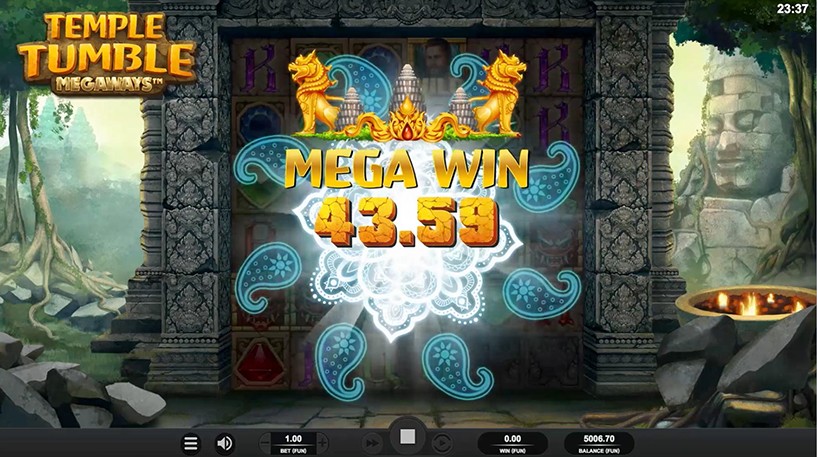
maxwin image 3

Responsible Gaming 18+ In Switzerland

Imagine you start not out of desire, but out of habit. This is exactly where entertainment turns into automatism. Responsible gaming means that you start consciously and stop consciously - and that you use tools before it gets difficult. In Switzerland, it applies: only 18+ and within applicable rules, without relying on unverifiable promises.

In 2026, mobile convenience is the big enhancer. Everything is fast: login, deposit, spin. That's why you need guardrails that work just as fast: time limits, deposit limits, breaks, reality checks, timeouts. These tools are not joy-killers. They are your system to prevent you from getting stuck on autopilot.

Pay attention to motivation. Are you playing because it's fun, or because you want to compensate for something? When it comes to compensating, a break is almost always better. And if you notice that you want to override your own rules "just for today", take that seriously. That's usually the moment when a time-out brings more than another round.

Next Step: Test, Plan, Log Out

Imagine you start today as an experiment, not a mission. Set a timer, set a budget, choose your stake calmly, play a block, take a break, decide anew. If you continue, stay within the same framework. If you stop, log out and briefly switch activities. This way, the evening truly ends instead of just continuing.

If you only want to remember one thing: It's not the game that needs control, but your session. And session control in 2026 is primarily about rhythm: blocks, breaks, clear exit.

FAQ

How do I start calmly when I have little time?

Set a timer, define a small budget, and start with a few manual rounds so you're not immediately on autopilot. Play a block, take a short break, and decide anew. If you realize during the break that you're continuing more out of habit, end the session and log out (18+).

How do I know if my stake is too high?

If you check your account balance after almost every spin, get restless, or spontaneously want to increase your stake, that's a clear signal. A good stake allows you to play a block without every round becoming emotional. Lower the level, or shorten the session, instead of increasing the pace.

How do I prevent reloading in the same session?

Make it a fixed rule: one deposit per session, no topping up afterward. This way, you don't have to decide in the heat of the moment. If you want to play later, take a longer break and start on another day with a new budget and timer.

What is the best moment for a break?

Whenever you click faster than you think, are annoyed, or feel the urge to "fix" something. A short interruption brings you back to a conscious decision. If the pressure remains after the break, ending for today is usually the smartest choice.

How do I deal with bonus promotions without getting entangled?

Translate the conditions into everyday language: time window, stake framework, game selection, and exit. If you can't make a clear sentence out of it, the offer is too complicated for today. Then it's often more relaxed to play without additional rules and just follow your own plan.

What helps if I want to keep playing immediately after a highlight?

Stop briefly, check your timer and budget, and then decide consciously. Adrenaline makes it easier to break rules, so a break right after a strong moment is useful. If you continue playing, stay within the same framework and do not increase impulsively.

When is a time-out useful?

If you start out of habit, repeatedly ignore your limits, or frequently think about reloading. A time-out breaks the reflex before it sets in. If patterns recur, a longer break can be better self-protection to ensure playing remains voluntary (18+).

Play Now
🇬🇧 English